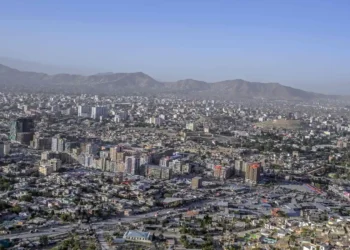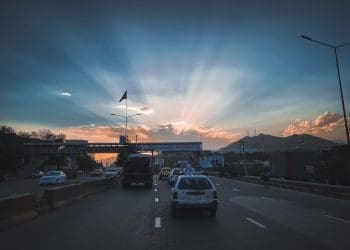

Street vending has long been one of the common forms of labor in Afghanistan. Old photographs of city markets from decades past make this clear. Here, the term street vending is used not in its literal sense—selling goods by hand—but in its broader meaning: selling items from carts, from makeshift stalls, or directly off the ground. What matters is that in recent years, the number of these “precarious workers” has increased at an unprecedented rate. Most of them are young people. Anyone who has worked as a street vendor or directly observed the experience knows that this type of labor offers the lowest possible economic benefit—and often poses the risk of financial loss. The effort required is immense, while the profit in the best-case scenario is minimal. So what has caused this surge in numbers? What drives people toward such gruelling and barely profitable work—work that could never lead to success in trade or the selling of higher-value goods?
A street vendor is one of the many surpluses produced by Afghanistan’s broken economic system—someone who cannot even find a way to “sell” their labor. At the final stage of desperation, they acquire whatever goods they can and attempt to sell them directly in the streets—directly being the key word here, as it reveals the limited chance of success. Raw goods and minimal selling power rarely bring meaningful income. Street vendors are one of the clearest indicators of a dysfunctional and stagnant economic order—an order that produces more and more “excess lives” every day. For years, the state has communicated through its inaction that these people have no place in its rusted machinery. A government concerned only with public piety has little interest in people’s hunger or survival. In Afghanistan’s small, backward private economy, there is likewise no enthusiasm for new projects or hiring labor. Investment is so rare—and so risky—that no ordinary citizen expects any businessperson to invest their money here.
But the street-vending crisis in Kabul also reflects deep social instability and economic fragility. It is an economy on the verge of collapse—one that would immediately fall apart if international aid were cut, plunging the country into an even deeper humanitarian disaster. Street vendors acquire their goods day-by-day, in small quantities. A serious fluctuation in currency values or prices would push the majority of them out of work instantly.
And yet, street vendors make up only a small fraction of Afghanistan’s vast army of unemployed. Unemployment is one of the country’s most critical unresolved issues—one the Taliban regime has taken no meaningful steps to address. Instead, they issue constant decrees about women’s dress, women’s education, the closure of beauty salons, restrictions on music, and constraints on the media. But the real, daily problems of human life have no significant place in their agenda.
The regime ruling Kabul is too unaware to understand that the rise in precarious labor is a direct result of its own economic policies. This is why its soldiers chase street vendors from the streets with kicks and whips. In other words, first the regime forces young people into desperation so great that they must become street vendors; then, it refuses to let them vend at all. And while it does not know who is truly responsible for this crisis, it refuses to accept even a fraction of the blame. The poverty and helplessness of the people are the result of a collapsed economy—one the regime has brought with it (though the pre-Taliban economy was itself kept alive artificially by massive foreign injections of cash). Expelling vendors from the streets is no solution. Nothing—truly nothing—can be solved with whips and force.
The street vendors will return. They will return every day until the time comes when they are no longer forced into street vending, when they no longer exist as the “excess” of a failed economic system.