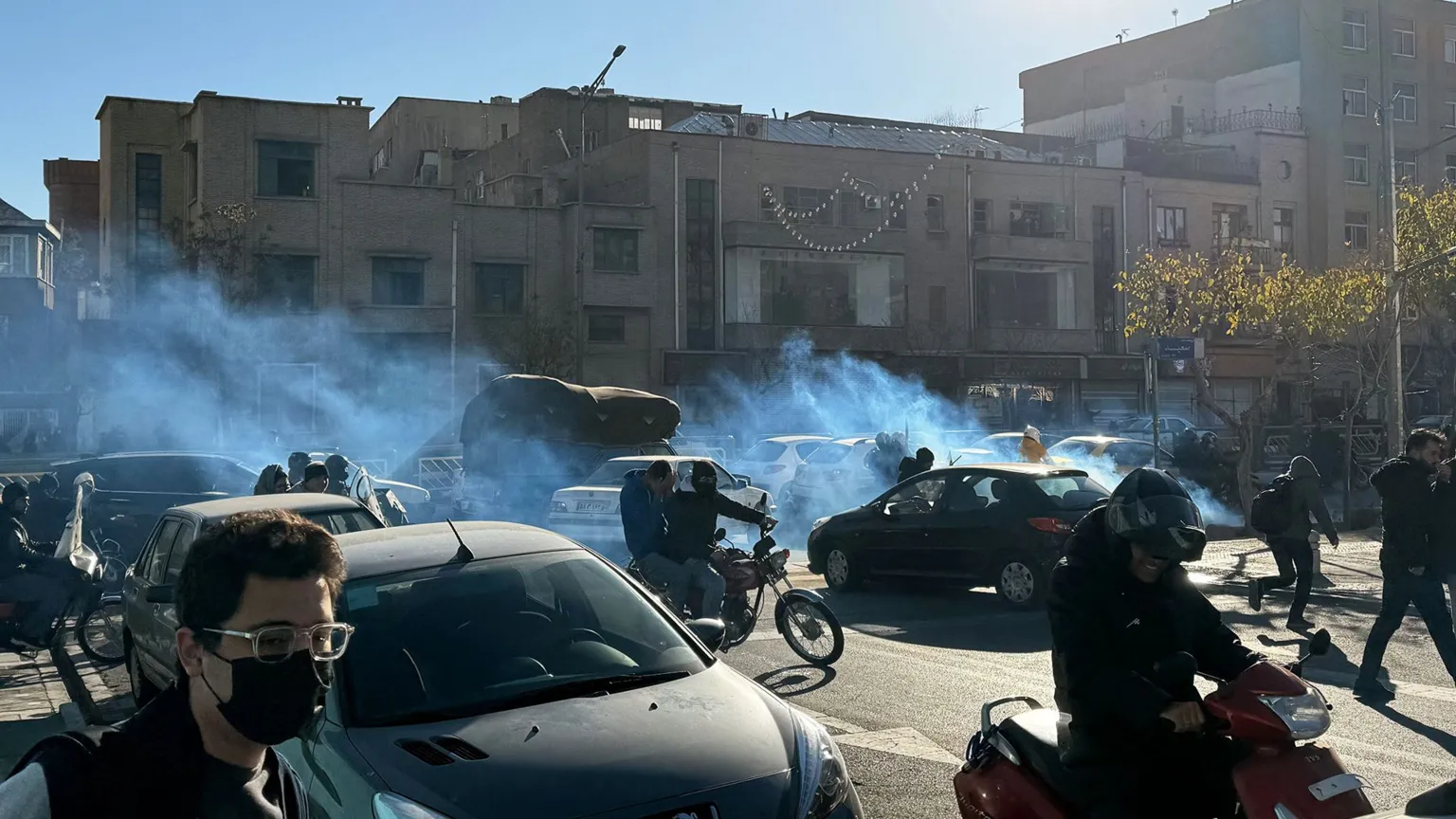
HRANA, the news agency affiliated with human rights activists in Iran, reported that by the ninth day of protests in the country, more than 1,200 demonstrators had been detained and 29 killed.
According to the report, at least 257 locations across 88 cities in Iran have witnessed protest gatherings in recent days.
HRANA noted that despite heightened security measures, increased presence of security forces, ongoing field confrontations, and the use of “weapons in some areas,” the geographic spread of protests has not diminished.
This wave of demonstrations began on the seventh of the Iranian month of Dey amid rising economic pressures on segments of Iranian society. Currency spikes, market instability, declining purchasing power, and a bleak economic outlook have created widespread financial insecurity for households and labor activists alike.
HRANA added that, in addition to roads, 17 universities across Iran have seen protest activity in recent days.
The Iranian government has categorized protesters into two groups: “protesters” and “rioters,” stating that it will respond harshly to the latter.
Gholam-Hossein Mohseni Eje’i, Iran’s judiciary chief, announced that the government will show no leniency toward the “rioters” this time, claiming that the United States and Israel support them. He added that while the protesters seek economic stability, others exploit the demonstrations to disrupt Iran’s security and public order.
U.S. President Donald Trump has twice warned the Iranian government that any use of force against protesters will provoke a response from the United States.
Israeli Prime Minister Benjamin Netanyahu, speaking in the Knesset yesterday, said that he and Trump are aligned on the Iran issue. He expressed solidarity with “their (Iranian) struggle for freedom and justice,” describing Iran as being in a “decisive position” and emphasizing that Iranian citizens can shape their own future.