Two-thirds of women participating in a new study by the Women and Children Research and Advocacy Network reported having “very negative” experiences with Taliban courts.
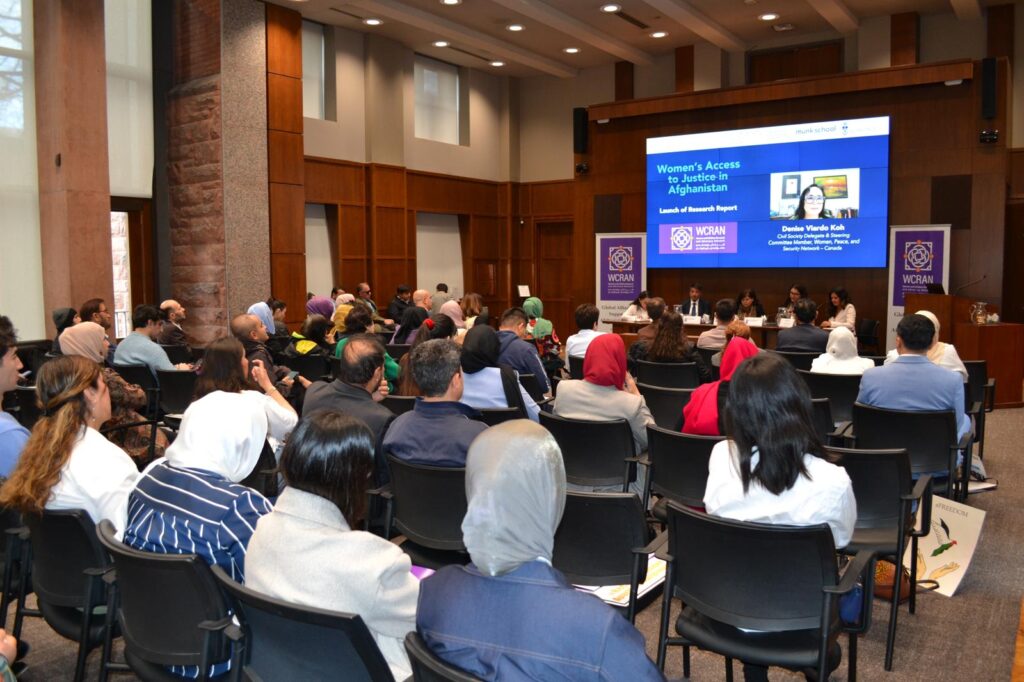
The study, whose findings were presented at an event at the University of Toronto in Canada, shows that Afghanistan’s justice system has fundamentally changed since the Taliban’s takeover, with formal structures largely replaced by informal mechanisms.
Eighty-one percent of participants reported complete or near-complete changes in Afghanistan’s judicial system, while 91 percent said the removal of female legal professionals from the justice sector has had a serious impact on case outcomes.
An overwhelming majority of respondents said women no longer pursue legal cases because they lack trust in the justice system under Taliban rule.
The event presenting the study, held on 30 April, was attended by legal experts, civil society activists, academics, diplomats, and journalists.
Zarqa Yaftali, founder of the Women and Children Research and Advocacy Network, said in her opening remarks: “Formal justice mechanisms in Afghanistan under Taliban administration have been severely weakened and replaced by systems that are not only unjust, but also expand impunity, especially in cases of violence against women.”
Richard Bennett, the United Nations special rapporteur on human rights in Afghanistan, said: “International accountability and sustained pressure to improve the human rights situation, especially women’s rights [in Afghanistan], are essential.”
Fawzia Koofi, former deputy speaker of Afghanistan’s parliament, said: “The absence of fair trials and the increase in arbitrary detentions have exposed people’s lives to serious insecurity and instability.”
Hassan Soroosh, Afghanistan’s ambassador to Canada, also stressed that responding to the “Afghanistan crisis” requires a coordinated approach that includes research, advocacy, and accountability mechanisms.
The program consisted of two parts, with the second section dedicated to two expert panels discussing the report and the situation of Afghan women.
The first panel examined the impact of existing legal frameworks on women’s access to justice and challenges to fair trials, while the second focused on the role of international legal mechanisms, including global judicial institutions, in addressing “systematic violations of women’s rights.”