Over the past year, Pakistan’s stance toward the Taliban shifted from friendship to open threats of their destruction. For the first time, the United States sent a delegation to Kabul, only to later signal its intention to control parts of Afghan territory, including the Bagram base. Internal divisions within the Taliban deepened, while their opponents intensified efforts to consolidate and coordinate.
Afghanistan in 2025 witnessed a series of significant developments. This report aims to provide a concise overview of the country’s political landscape over the past year.
The world has been compelled to engage with the Taliban
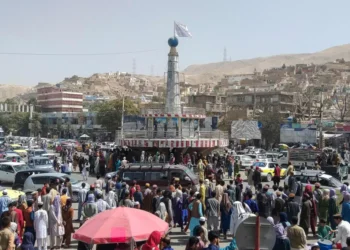
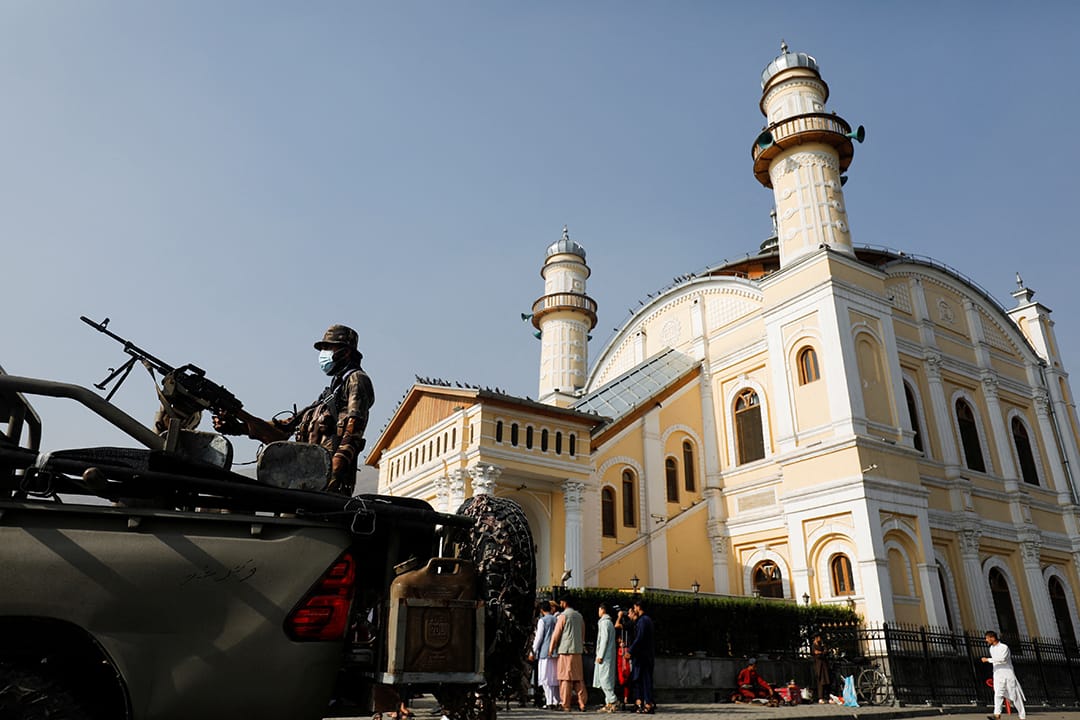
On March 10, 2020, the United Nations Security Council issued a resolution emphasizing that it did not recognize the return of the “Islamic Emirate of Afghanistan” and called on the Taliban to engage in intra-Afghan negotiations. Yet, on August 15, 2021, the Taliban entered the capital without reaching a political agreement with Afghan stakeholders. Since then, the world has sought to isolate the group, pressuring it to adhere to the Doha Agreement. As Vasily Nebenzya, Russia’s permanent representative to the U.N., has noted, those pressures have largely backfired. Over the past four years and four months, the Taliban have intensified policies against women and continued to govern without forming an inclusive government.
Afghanistan’s strategic location means that neighboring countries—and even those further afield are reliant on it for regional connectivity. Pakistan, for instance, needs Afghan routes to access Central Asian markets, and vice versa. Every day, dozens of aircraft transit Afghan airspace. Millions of Afghan migrants live abroad, from Pakistan in the east to the United States in the west. Afghanistan is estimated to possess underground mineral resources worth roughly $1 trillion.
Any country seeking to implement international projects on Afghan soil, expel Afghan migrants, or extract resources for its own benefit must engage with the country’s de facto rulers. Some nations, like Finland, may feel little need for such engagement its government has even cited this as a reason for closing its embassy but others, like Austria, cannot avoid it. In 2024, Austria attempted to deport an Afghan migrant, apparently without coordination with Kabul. The Taliban refused to accept the individual, forcing Austria to return him a move that prompted other European nations to recognize the practical necessity of engaging with the Taliban for deportation matters.
Nasir Ahmad Andisheh, Afghanistan’s permanent representative to the U.N. in Geneva, told Space Deeyar that the world interacts with the Taliban out of “reluctance and necessity,” not goodwill. He added that neighboring countries maintain “pragmatic” relations with the Taliban. Iran, for example, engages with the group due to its long shared border and pressing issues such as drug and human trafficking. This global necessity has gradually eroded the Taliban’s isolation, giving the group a foothold on the international stage.
U.S. Largely Turns a Blind Eye to Afghanistan
After a disastrous and hasty withdrawal from Afghanistan, the United States sharply curtailed its ties with the Taliban, closing its embassy and withdrawing its diplomats.
Over the years, Washington has occasionally engaged with the Taliban when it served U.S. interests, while at other times choosing to disengage entirely. Observers have described this posture as a policy of “benign neglect” toward Afghanistan—a stance that critics warn could backfire, much as it did in 2001.
Once the largest donor to Afghanistan, the U.S. halted all humanitarian aid in April 2025. Since the Taliban came to power, Washington had provided a total of 3.38 billion dollars (approximately 253.2 billion Afghanis) in assistance. Before cutting off aid, on March 20, 2025, a U.S. delegation visited Kabul the first official American mission to Afghanistan since the Taliban’s return to power to negotiate the release of Afghan citizens detained by the group.
American prisoners
The United States’ primary objectives in Afghanistan are to ensure the country’s security, secure the release of its citizens held by the Taliban, and neutralize terrorism threats emanating from Afghan soil. To achieve the first and third goals, Washington has been accused of coordinating with Pakistan, while for the second, it has engaged directly with the Taliban.
The U.S. has successfully secured the release of at least five of its citizens, while, according to CNN, three others remain in Taliban custody. The most recent American delegation visited Kabul roughly three months ago.
Washington has offered concessions to the Taliban to facilitate the release of American citizens: the names of Interior Minister Sirajuddin Haqqani and two other members of the Haqqani network were removed from the U.S. State Department’s reward list. Nevertheless, the United States continues to designate these individuals and the Haqqani network itself as terrorist entities.
Former U.S. special envoy for Afghan peace Zalmay Khalilzad has said that the issue of American detainees remains the key obstacle preventing a broader normalization of relations between the Taliban and Washington.
Bagram Air Base
On September 18, U.S. President Donald Trump announced efforts to regain control of Bagram Air Base. His comments came at a time when American delegations had recently visited Afghanistan and would do so again shortly after to secure the release of U.S. citizens held by the Taliban.
Trump’s remarks drew widespread negative reactions from regional powers, including Russia, China, Iran, Pakistan, and India, and were interpreted in various ways. Some analysts suggested he had other motives, while others argued that he was seeking to return and “restore lost prestige.” Supporters of the former view were in the majority.
In the days following, Trump repeatedly referenced the idea of reclaiming Bagram, but has made no public mention of it since. The Taliban responded sharply, declaring that the United States would never be allowed to enter Afghanistan militarily, though Washington could return for investment purposes. The group warned that it was prepared, if necessary, to fight the U.S. as it had in the past.
America ignored the Taliban’s requests
The Taliban have called on the United States to come to Afghanistan and invest across multiple sectors. In September, Abdul Ghani Baradar, the Taliban’s deputy head of economic affairs, told a visiting U.S. delegation in Kabul that Washington should pursue engagement rather than confrontation, play an “active role” in rebuilding Afghanistan, and invest in various sectors.
Baradar highlighted opportunities for investment across Afghanistan, including in mining, transportation, agriculture, telecommunications, and technology. At the time, the Taliban claimed that the U.S. delegation had acknowledged Washington’s willingness to cooperate on Afghanistan’s economy and expressed readiness to invest in the country.
Three months later, however, the United States has yet to establish any economic or commercial ties with the Taliban. Washington has also not responded positively to the Taliban’s request to assume control of the Afghan embassy.
Abandoned weapons
After returning to the White House, Donald Trump declared in a speech that if the Taliban wish to continue receiving U.S. aid, they must return military equipment left behind in Afghanistan. The total value of this equipment has been estimated at $7 billion, according to Seeger.
Pakistan has stated that much of this equipment fell into the hands of militant groups opposed to Islamabad and was recovered from militants killed in the country. In response, the Taliban said these weapons were seized while being transported from Pakistan into Afghanistan. They described the equipment as “spoils of war,” refused to return it, and claimed they were attempting to refurbish unusable arms.
Pakistan views the weapons as a serious threat to its national security, asserting that militants have used them to kill “thousands of innocent civilians” across the country.
In the same year, Pakistan’s Foreign Minister, Muhammad Ishaq Dar, praised Trump’s statements in a phone call with then-U.S. National Security Adviser Michael Waltz. The Pakistani military has requested that the United States either retrieve or purchase the equipment to prevent its circulation on the black market.
Pakistan; From Friendship to Enmity – Taliban-Pakistan Relations Take a Sharp Turn in 2025
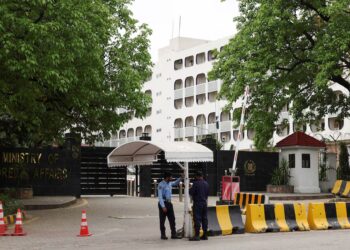
In 2025, the relationship between the Taliban and Pakistan underwent a dramatic 180-degree shift. Early in the year, the two sides maintained cordial ties, but over time, the relationship deteriorated, eventually reaching a near-complete standstill across political, economic, and trade channels. Approximately six weeks ago, the Taliban issued an order to suspend all commercial relations with Pakistan and have since sought alternative avenues for trade and cooperation.
The core issue driving the rift is the Tehrik-i-Taliban Pakistan (TTP), a militant group founded around 20 years ago, which has emerged as a significant security threat in northeastern Pakistan. Another active insurgent group, the Balochistan Liberation Army (BLA), operates in Pakistan’s Balochistan province, though on a smaller scale. Islamabad asserts that both groups maintain a presence in Afghanistan, collaborate with one another, and use Afghan territory to launch attacks against Pakistan. Pakistan has repeatedly alleged that attackers cross into its territory from Afghanistan, that strikes are planned and directed from Afghan soil, and that Afghan nationals are involved in operations. Some countries, including Denmark, have found Pakistan’s claims that Afghan soil is being used against them to be plausible.
According to Islamabad, nearly 1,200 people were killed in Pakistan in 2025 as a result of “Afghanistan-based terrorism.” The Pakistani government has also stated that, since 2022, over 214 Afghan nationals have been killed in counterterrorism operations.
The Taliban, however, do not classify Pakistan-focused armed groups as terrorists, arguing that these groups have “legitimate demands.” Some contend that the TTP collaborated with the Taliban during the latter’s fight against the Afghan republic and coalition forces, and therefore “now is the time for repayment.” The United Nations Security Council has confirmed the TTP’s presence in Afghanistan.
Over the past four years, Taliban and Pakistani forces have engaged in multiple minor skirmishes along the Durand Line. The most significant confrontation occurred when Pakistan struck Paktika on the night of Friday, September 8, violating Kabul’s airspace. The Taliban retaliated on Sunday, September 10, attacking Pakistan from six points along the Durand Line. Dozens were killed on both sides. Pakistan claimed that both the TTP and BLA cooperated with the Taliban during the strikes.
In the following days, Pakistan launched additional attacks on several Afghan provinces, including Kandahar, Paktika, Paktia, Khost, Kunar, Helmand, and, for the first time in history, Kabul. Pakistani forces entered part of Kandahar and raised their national flag over a Taliban outpost. According to UNAMA reports, the five-day conflict left 50 Afghan civilians dead and 557 injured, while no civilian casualties were reported in Pakistan. A ceasefire was established on September 14 (23 Mizan) and, despite occasional violations, remains largely in place. Four rounds of negotiations in Doha, Istanbul (two rounds), and Riyadh ended without reaching a lasting resolution.
As relations soured, Pakistan increasingly adopted a hardline stance toward the Taliban. Officials questioned the regime’s legitimacy, spoke of Taliban overthrow, and demanded the “liberation” of Afghanistan with a government that “truly represents all its people.”
These pronouncements came from a government that had long supported the Taliban, celebrated their rise to power, and sought to expand relations with them. Before the escalation into full-blown conflict, the two sides had upgraded diplomatic ties, and Pakistan agreed to extend the China-Pakistan Economic Corridor into Afghanistan a key element of Beijing’s ambitious Belt and Road initiative aimed at expanding trade routes and global influence. China has also sought to mediate between the Taliban and Pakistan to protect its economic interests. Chinese companies are actively involved in Afghanistan’s mining sector.
Pakistan itself faces internal insurgencies and must control these groups to pursue its national objectives. Having endured a secession in 1971, Islamabad is determined not to advance without neutralizing the Balochistan Liberation Army and the Islamist Tehrik-i-Taliban Pakistan.
Fearing these groups find sanctuary in Afghanistan, Pakistan has repeatedly demanded that the Taliban either relocate or hand over militants along the Durand Line. To exert further pressure, Islamabad initiated the mass expulsion of Afghan migrants. According to UN reports, Pakistan has expelled roughly 1.7 million Afghan nationals over the past three years, nearly one million of whom were expelled in 2025 alone. Taliban requests for a gradual repatriation process have largely gone unheeded; over two million Afghan migrants remain in Pakistan. Meanwhile, 2.8 million Afghan nationals returned to the country from abroad in 2025.
Relations with the other countries in the region
Over the past year, several countries in the region have deepened their ties with the Taliban. While these nations have stressed issues such as the formation of an inclusive government and respect for human rights, they have not made such conditions a prerequisite for engagement. Analysts suggest that, rather than fully isolating the Taliban, regional powers are pursuing “pragmatic, temporary” relationships to safeguard their economic and security interests. Experts emphasize that these countries do not view the Taliban as a “reliable long-term partner.”
India, seeking to counterbalance Pakistan, has moved closer to the Taliban—a trend that intensified as Islamabad-Taliban relations reached peak tension. Two days before a major confrontation between Taliban and Pakistani forces, Taliban economy minister Amir Khan Muttaqi visited New Delhi, followed by two other Taliban ministers. Amid this tense period, India upgraded its diplomatic representation in Kabul to the level of ambassador. New Delhi has condemned Pakistan’s attacks on Afghanistan and also signaled its willingness to construct a dam on the Kunar River two actions perceived as direct countermeasures to Islamabad. Yet, India maintains that its engagement with the Taliban aims primarily at “helping the Afghan people.”
Russia, seeking to fill the void left by the United States and NATO, address its security concerns, and expand influence, formally recognized the Taliban in July, becoming the only government to take this step. Prior to this move, Russia had suspended the Taliban’s designation on its prohibited list. Several months later, Moscow acknowledged that the Taliban had failed to address Russian security concerns. With no other country following Russia’s lead in recognition, the Taliban did not advance toward forming an inclusive government, and the presence of armed militant groups in Afghanistan persisted. Some observers suggested that Russia’s recognition may have been a miscalculation. Moscow currently estimates that over 20 armed groups, totaling roughly 15,000 fighters, operate in Afghanistan, posing what it calls “the primary threat” to Central Asia.
This assessment gained urgency when Tajikistan suffered three attacks from Afghan soil within a single month, leaving five Chinese citizens, two Tajik security personnel, and three militants dead, and injuring five additional Chinese nationals.
On Monday, Tajik authorities accused the Taliban of “negligence and irresponsibility,” demanding effective measures to secure the border and an official apology to the people of Tajikistan. The Taliban, in response, pledged to prevent future attacks. A “targeted intergovernmental program” under the Collective Security Treaty Organization is scheduled to strengthen the Tajik-Afghan border in 2026 and is expected to conclude by 2029.
Alexander Knyazev, senior researcher at the Moscow-based MGIMO Institute of International Studies, affiliated with Russia’s Foreign Ministry, notes that these developments coincided with signs of improving bilateral relations between Tajikistan and the Taliban. He adds that the current moment calls for assistance to the Taliban “without falling into provocations.” Tajikistan has been the only Central Asian country that has not expanded its ties with the Taliban, though it had previously signaled a willingness to do so prior to the cross-border attacks. Researcher Vahiduddin Amrov observes that, in the Taliban’s early years in power, Dushanbe viewed the group as a “direct threat,” but now prioritizes cooperation for security reasons. According to Amrov, Tajikistan felt isolated when Uzbekistan, Kazakhstan, and Turkmenistan established direct relations with the Taliban.
Uzbekistan has actively cultivated close ties with the Taliban. Taliban officials have visited Tashkent multiple times, and Uzbek officials have reciprocated with visits to Afghanistan. Bilateral trade between the two countries reached approximately 1.3 billion dollars (85.8 billion Afghanis) in the first 11 months of 2025. Uzbek authorities emphasize that peace and stability in Central Asia are inherently linked to conditions in Afghanistan.
Taliban’s interaction with Europe
European countries maintain the most limited relations with the Taliban, primarily due to human rights considerations, and have repeatedly condemned the group’s policies toward women contrasting sharply with the approach taken by regional powers. Across Europe, thousands of Afghan migrants are considered “eligible for deportation,” yet such repatriations require an agreement with the Taliban. This necessity has provided the Taliban with a rare opening to engage with the West.
Through these interactions, the group has been able to dispatch several diplomats to Austria, Switzerland, and Germany. In Germany, Taliban diplomats have assumed control over the Afghan consulate in Bonn, while in Austria, they have been tasked with verifying the identities of Afghan migrants for potential deportation. The repatriation process remains unfinished. Earlier, twenty European countries petitioned the European Union to prioritize and facilitate this issue.
Ibrahim Bahish, an analyst at the International Crisis Group, observes that the Taliban is eager to integrate into the global political system. “Official engagements surrounding the acceptance of Afghan migrants from Europe represent small victories that increasingly draw the Taliban into the international order,” he said.
Threats against the Taliban
The Taliban is confronting two growing challenges: internal divisions and an increasingly coordinated external opposition. The first has become more visible over time, while the second is gradually gaining coherence. The United Nations Assistance Mission in Afghanistan (UNAMA) has confirmed that the Taliban is divided into two main factions.
One faction, deeply hard-line, opposes education, employment, and public mobility for women and girls and advocates for a mono-ethnic, mono-religious, mono-gender, and ideologically uniform system of rule. The second faction holds more pragmatic views, arguing that the durability of Taliban rule depends on accommodation with the international community.
United Nations Secretary-General António Guterres noted in his quarterly report that this divergence became evident during a nationwide internet shutdown, when the Taliban’s supreme leader, Hibatullah Akhundzada, ordered internet services cut only for Prime Minister Hasan Akhund to reverse the decision 48 hours later.
The more pragmatic faction has also criticized the Taliban’s education policies. On May 10, 2024, the Taliban dismissed Sher Mohammad Abbas Stanikzai from his post as deputy foreign minister following his public remarks and audio messages opposing the ban on girls’ education. Months later, Akhundzada reportedly ordered his arrest, forcing Stanikzai to flee the country. He has not returned since. Reports indicate that the Taliban leader intended to put him on trial, but Stanikzai escaped before being detained.
Sirajuddin Haqqani, the Taliban’s interior minister, publicly criticized Taliban policies in December 2024 and subsequently left the country. He remained abroad for several weeks, and reports later emerged suggesting he had resigned. The U.N. Security Council’s sanctions monitoring committee said that since his return, Haqqani has spoken cautiously, emphasizing national unity and the supremacy of Islamic law while urging Taliban officials to remain loyal to Akhundzada.
In recent days, however, Haqqani’s tone has sharpened. In a sermon at a mosque in Khost, he criticized the Taliban’s governing methods, saying that governance “cannot be conducted this way.” In a separate address, the leader of the Haqqani network said Taliban leaders were seeking “reasonable and legitimate solutions” to the country’s problems.
Mohammad Omar Daudzai, Afghanistan’s former interior minister, told Diyar Television that the Taliban is far from monolithic and that disagreements among its leaders persist. He argued that these differences could ultimately “open pathways toward solutions.”
Outside the Taliban’s rule, Afghan politicians, leaders, and activists are attempting to forge an alternative political vision. Long-standing rivalries, broken alliances, and the absence of international backing have prevented a unified front against the Taliban. Taliban opponents have split into two camps: those pursuing a military solution and those still advocating dialogue and negotiation.
According to the U.N. Security Council’s sanctions committee, from January to July 2025 armed opposition groups carried out 116 attacks inside Afghanistan—73 attributed to the National Resistance Front and 43 to the Freedom Front. The second camp has focused on convening meetings to demonstrate unity and articulate political demands. While resistance groups continue fighting inside Afghanistan, they are also seeking international support abroad and attempting to unify with other factions under a broader political umbrella.
In mid-February, the fifth meeting of the “Vienna Process” was held in Austria, bringing together dozens of representatives from political and military groups opposed to the Taliban, including leaders of the Resistance and Freedom fronts as well as civil society and women’s rights activists. The meeting concluded with a declaration calling for international support to establish a “transitional government” in Afghanistan.
Despite their limited presence inside the country, these opposition groups are not widely viewed as an immediate existential threat to the Taliban. Still, the Taliban has consistently sought to deny their presence altogether a policy it has pursued for years. Some analysts argue that overthrowing the Taliban, which has entrenched itself deeply within Afghan society, would be exceedingly difficult and risk renewed bloodshed and civil war. Others contend that the Taliban will not come to the negotiating table unless it perceives a genuine military threat.
Over the past year, political opponents of the Taliban including Abdul Rashid Dostum, Mohammad Mohaqiq, and Ismail Khan have repeatedly described the Taliban regime as unstable and predicted its collapse. In one of his most recent speeches, Dostum warned that the Taliban must engage in negotiations or face consequences that would force it “to its knees.”
The Taliban has responded minimally to these statements and activities. Its spokesman, Zabihullah Mujahid, has dismissed opposition figures as “spent forces,” saying that Afghanistan’s interests do not require talks with them.
More recently, figures including Dostum, Mohammad Hanif Atmar, Ahmad Massoud, Mohaqiq, Atta Mohammad Noor, Ismail Khan, Abdul Rab Rasul Sayyaf, Yunus Qanuni, Omar Daudzai, and other prominent leaders issued a joint statement under the banner of “National Consensus,” calling on the Taliban to enter negotiations and urging the formation of a legitimate government that respects human rights. It was one of the rare gatherings in which most of Afghanistan’s major political figures articulated shared positions. Participants said the international community had urged them to achieve unity as a prerequisite for any meaningful change.
The Taliban has not publicly responded to the statement. However, Russia’s Nezavisimaya Gazeta reported, citing a participant, that individuals close to Sirajuddin Haqqani and Abdul Ghani Baradar requested a Pashto version of the declaration.
More than four years and four months after the Taliban returned to power, international engagement with the group remains limited and reluctant. Opposition forces are gradually setting aside differences and moving toward greater cohesion. The war in Gaza has ended, and the conflict in Ukraine appears to be approaching its final phase two crises that had long dominated global attention. Meanwhile, Afghanistan’s humanitarian and economic crises have deepened, and threats emanating from the country toward others persist and remain serious.
The question increasingly asked by diplomats and analysts alike is whether Afghanistan has become a ticking time bomb one whose explosion may no longer be avoidable.