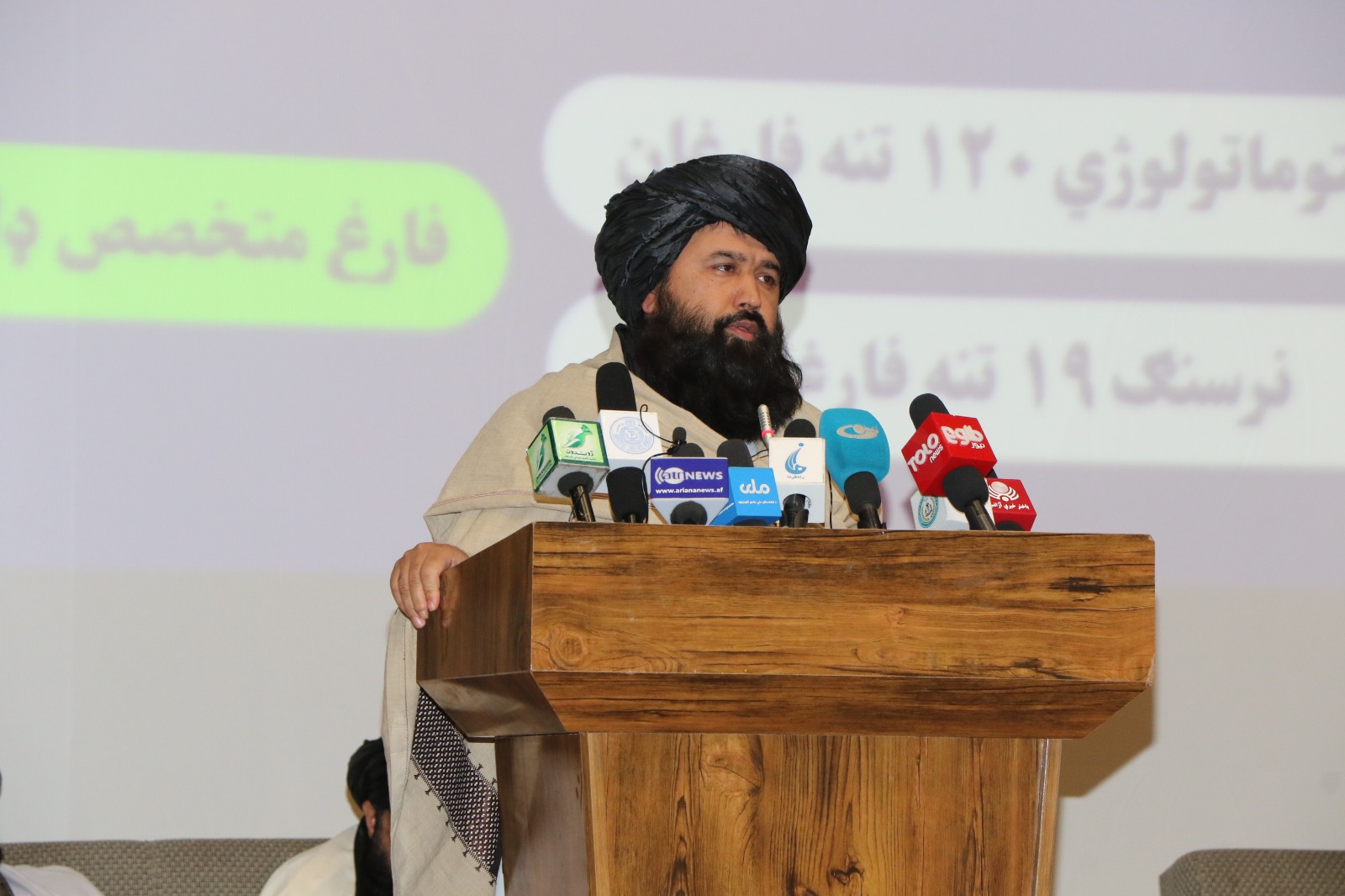
The Taliban’s minister of higher education emphasized limited mobile phone use during a meeting in Kandahar with students, faculty, and administrative staff of Afghanistan’s National University of Agricultural Sciences and Technology (ANASTU).
Neda Mohammad Nadim said that mobile phone use wastes time and can harm a person’s abilities, ethics, and beliefs.
He added that students are vital to their families, society, and the Taliban regime, and that significant funding has been allocated to them.
The Taliban’s minister of higher education said that theoretical instruction alone is insufficient and urged ANASTU university officials to provide practical training opportunities for students.
The Taliban have imposed strict restrictions on Afghan universities. The group previously banned the teaching of 18 academic subjects across the country’s higher education institutions.
Zia-ur-Rahman Aryoubi, the scientific deputy of the Taliban Ministry of Higher Education, issued a letter to universities and other higher education centers stating that certain textbooks “contradict Sharia and the policies of the regime.”
The group has also prohibited the use of 680 books as course materials, nearly half of which were authored in Iran.
Taliban authorities have further required Afghan academics to “align their appearance with Sharia.” Students, faculty, and administrative staff at public universities are compelled to wear head coverings and refrain from trimming their beards.
The Taliban have employed harsh methods, including humiliation and verbal abuse, to enforce these restrictions.