
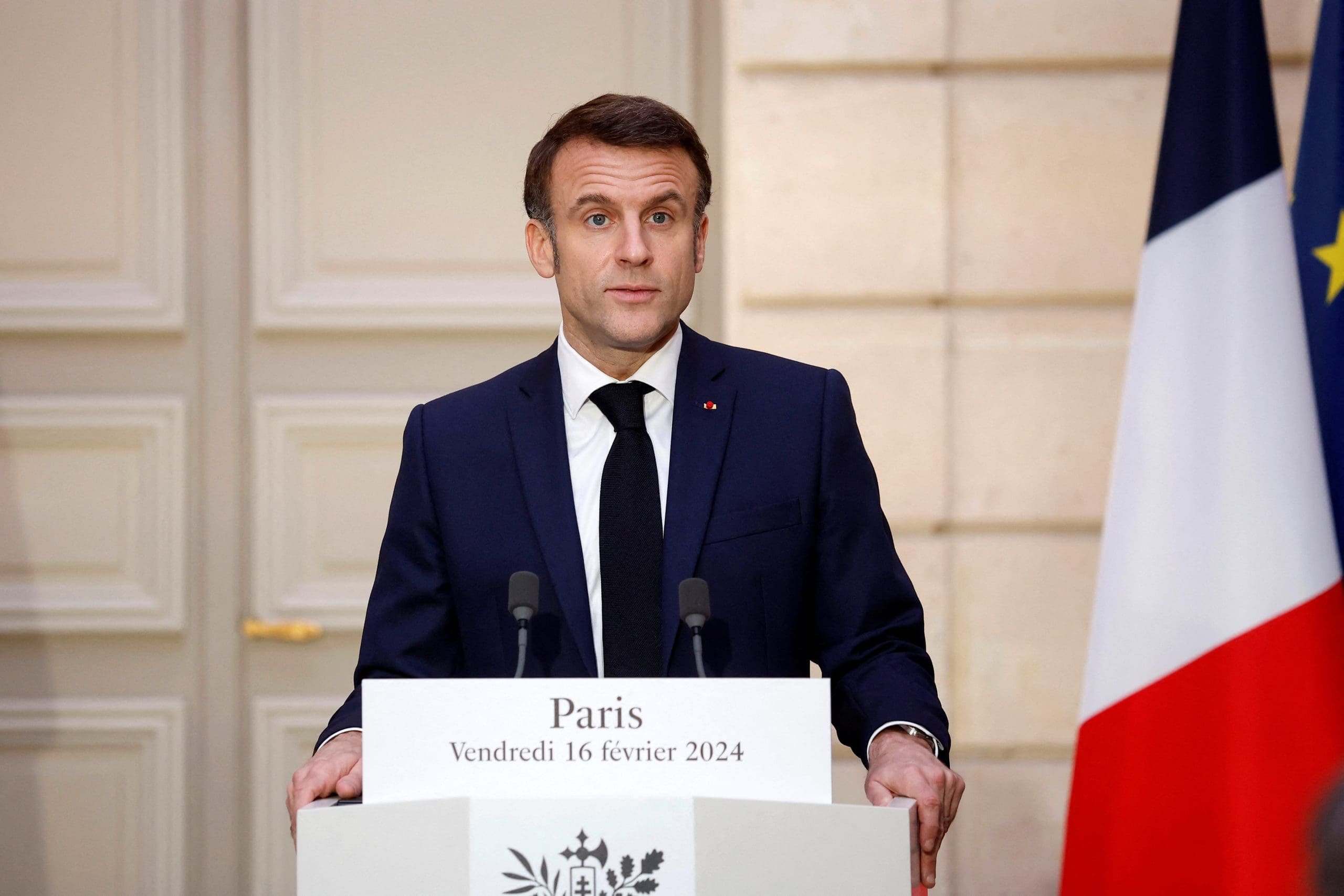
President Emmanuel Macron’s declared intention to recognize the State of Palestine—if carried out—would mark a turning point in Middle Eastern diplomacy and in the geopolitics of major powers. Beyond its legal and symbolic implications for Palestine and Israel, this move signals a deeper shift in Europe’s approach to the protracted Middle East crisis and a gradual distancing from U.S. policy. Understanding this development requires examining three interconnected dimensions: France’s longstanding foreign-policy tradition and its place within the European Union, its complicated relationship with the Trump administration, and the potential consequences of this step for the emerging multipolar global order.
Historically, France has been one of the few Western powers that consistently sought to balance support for Israel with solidarity toward the Palestinian cause. Since the 1960s and the era of Charles de Gaulle, Paris has shaped a foreign policy grounded in “strategic independence,” diverging from the unilateral approaches of Washington and London. In subsequent decades, France supported the two-state solution and opposed the annexation of Palestinian territories by Israel, adopting the role of a moral mediator in the conflict. Macron’s inclination toward Palestinian recognition is a continuation of this tradition, although its geopolitical dimensions are broader than ever due to the global shifts now underway.
In the transatlantic context, this decision stands in sharp contrast with the policies of the Trump administration. Since returning to office, Trump has pursued unconditional support for Israel and described any step toward Palestinian statehood as a “betrayal of Israel’s security.” French recognition of Palestine would widen diplomatic distance between Paris and Washington and could provoke retaliatory U.S. measures—ranging from threats of trade sanctions to constraints in defense and economic cooperation. Still, Macron appears willing to take that risk in order to redefine France’s global role and present the country as an independent, forward-leaning champion of multilateralism.
For the European Union, the implications are layered and significant. The EU has never reached a unified stance on Palestine: countries such as Spain, Ireland, and Norway have recognized Palestine, while Germany and several Eastern European states remain opposed. France’s move could deepen these divisions, yet it may also create an opening for Paris to assume a leadership role in shaping European foreign policy. With Germany preoccupied by domestic and economic issues and the United Kingdom outside the Union, France could seize the initiative and steer the EU toward a more assertive Middle East posture. If such leadership materializes, it could alter the EU’s collective policy and lead to more explicit support for the two-state solution.
At the regional level, recognition of Palestine by a Western power holding a permanent seat on the UN Security Council would bolster the international legitimacy of the Palestinian state and increase pressure on Israel to return to peace negotiations. It may even produce a “domino effect,” prompting other European and Global South countries—previously hesitant—to follow France’s lead. This shift could alter the balance of votes and influence within international institutions, including the Security Council and the General Assembly, and pave the way for new binding resolutions targeting Israeli policies.
Yet the decision carries considerable risks for France. Potential tensions with the United States, pressure from pro-Israel lobby groups, and sharp domestic political reactions could prove challenging. Security risks—including cyber or propaganda attacks—are also conceivable. At the same time, the move could strengthen France’s relations with Arab and Muslim-majority countries and generate new economic opportunities, particularly in energy and investment. This combination of opportunity and vulnerability makes Macron’s initiative one of France’s most high-stakes diplomatic moves in recent decades.
At a broader level, the development reflects deeper changes within the international system. As global politics drift toward multipolarity, Europe—especially France—is seeking to gradually distance itself from America’s unilateralist tendencies. In this context, recognition of Palestine is not only a moral stance but also a tool for affirming Europe’s independent identity in world affairs. It may open the way for Europe to assume a more active role in managing global crises and redefine its position in the international order.
In conclusion, France’s recognition of Palestine—though seemingly symbolic—could carry far-reaching consequences for global politics. It would strengthen Palestine’s international legitimacy, increase pressure on Israel, bring Franco-American relations into a new stage of tension, challenge EU coherence on foreign policy, and accelerate the shift toward a multipolar global system. Through this decision, France positions itself as a power seeking both to champion justice in the Middle East and to lead an independent, multilateralist Europe on the world stage—an ambition whose realization will depend on the complex reactions of global actors in the months and years ahead.
The opinions presented here belong solely to the authors and do not represent Deeyar’s editorial stance.