Agence France Press, citing local Taliban officials, reported that last month 15 Afghan citizens attempting to migrate illegally died from the cold in Iran. The Iranian government had previously reported the number as 10.
The mother of one of the victims told Agence France Press that she had no choice but to send her son away because the family had no food to eat and no clothes to wear.
Holding a photograph of her son, Habibullah, Majan said, “The house we live in has no electricity and no water. It has no proper windows and no heating.” She added, “I had no other option. I said, let him go so our lives might get better.”
Gul Ahmad said his half-brother, Habibullah, worked polishing shoes but earned only 15 afghanis a day.
“He was ready to work as a shepherd for 2,000 afghanis a month or take a job in a shop, but he couldn’t find anything,” Gul Ahmad said. “So he was forced to leave. He told his mother, ‘I trust in God, I’m going to Iran.’”
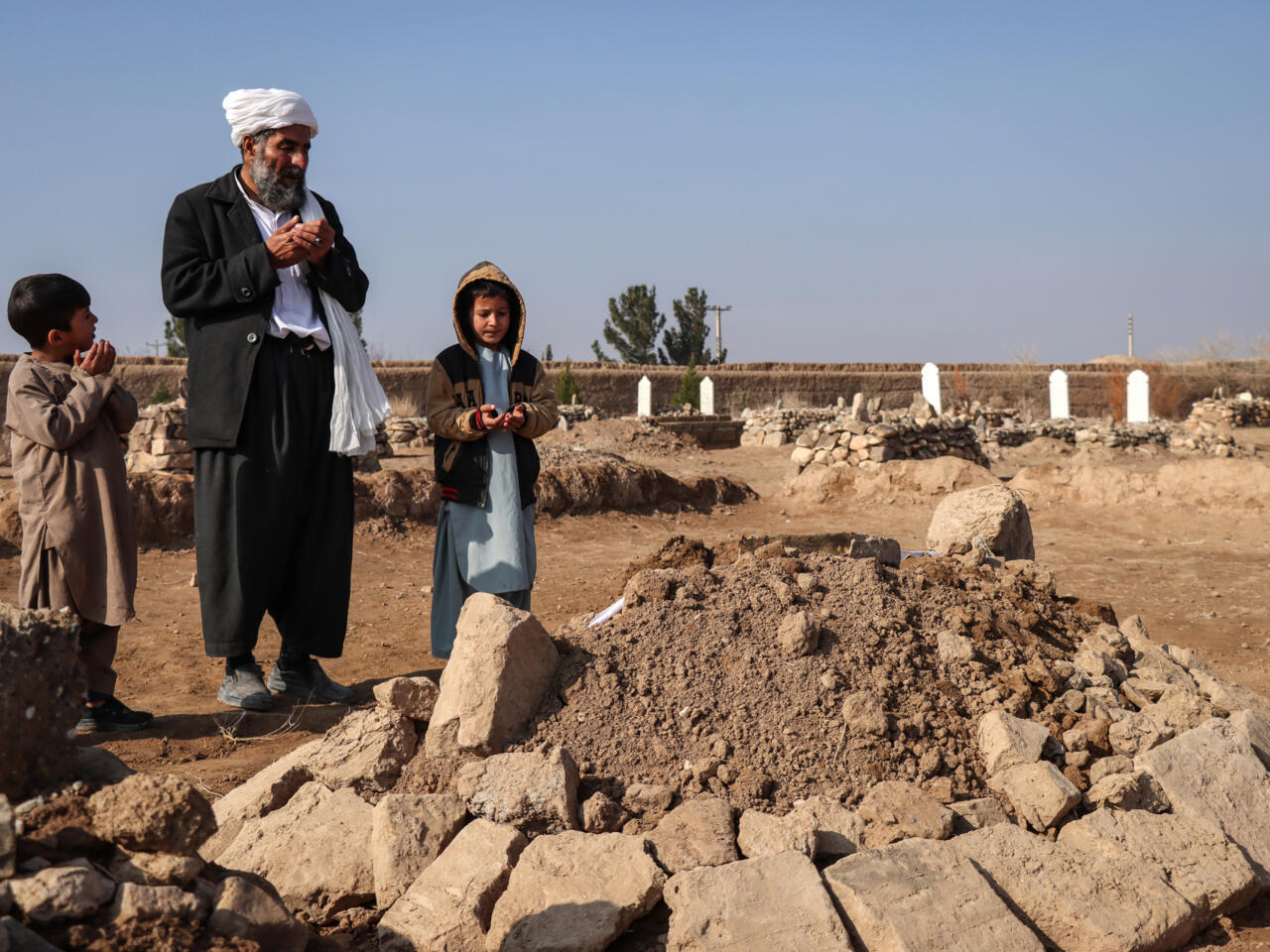
Habibullah’s body was returned to Afghanistan along with 14 others who met a similar fate. Three additional people attempting to cross illegally into Iran died on the Afghan side of the border.
Iranian authorities said they had rescued about 1,600 Afghan nationals who were at risk because of the cold.
Abdul Majid Haidari, who leaves behind a one-year-old son with a heart condition, had also tried his luck in recent days. He had previously worked at a brick kiln, but the job was not enough to cover his child’s medical costs and his family’s basic needs.
His half-brother, Younes, told AFP, “We were forced to go because of poverty. We moved in the rain. In such weather, border guards’ radars and cameras don’t work properly. But the smuggler got lost.” He said they were unable to light a fire along the way, and when snowfall began, Abdul Majid said, “I can’t walk anymore.”
“Some people told us to leave him behind so the lives of the other 19 wouldn’t be endangered,” Younes said. “After carrying him for another two hours, his eyes stopped closing and his body grew heavier.”
According to Younes, an Iranian family eventually took them to a hospital, where doctors said Abdul Majid had already died.
According to the United Nations, nearly half of Afghanistan’s population already struggling with the effects of earthquakes and drought—requires humanitarian assistance. Iran and Pakistan have expelled around five million Afghan migrants since September 2023.
Afghans are drawn to Iran by greater job opportunities and a shared language, but legal pathways to travel remain limited and difficult.
Muthia Izora Maskun, deputy head of the International Organization for Migration, said many Afghans cite economic hardship, job insecurity, food insecurity and restricted access to services as reasons for leaving the country.
“They leave even if it means taking irregular routes that are extremely dangerous because of the cold and the risks of human smuggling,” she told AFP.
Abdul Mateen Qane, a spokesman for the Taliban’s Interior Ministry, told AFP that the group has taken “serious steps to confront smugglers.”
Despite those efforts, attempts to cross illegally into Iran continue.