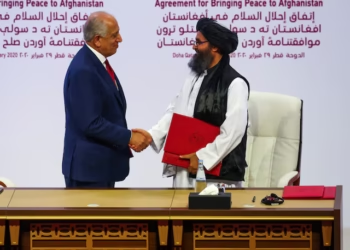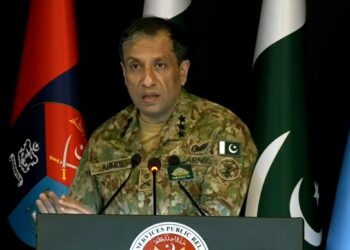
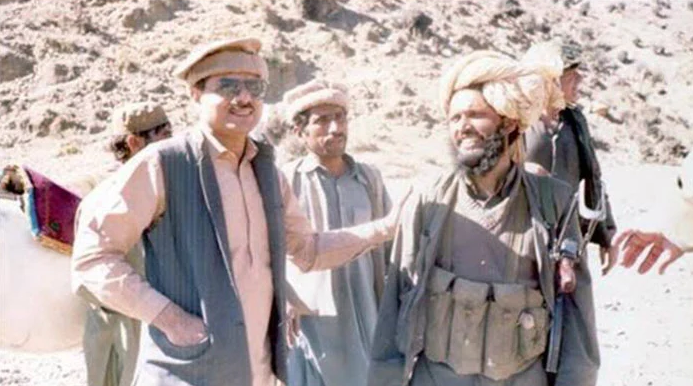
The relationship between the Afghan Taliban and the Pakistani state has, from the birth of the movement until today, been one of the most complex examples of interaction between a government and an armed non-state actor in South Asia. Shaped by overlapping interests, geopolitical rivalry, religious ties, and security calculations, this relationship has now shifted—after several years of dramatic change—from mutual dependence to open hostility. The history of this connection shows how short-term security strategies can, over the long term, turn into threats against the very governments that once nurtured them.
In the 1980s, Pakistan—backed financially and militarily by the United States and Saudi Arabia—supported Afghan mujahideen groups against the Soviet Union. Out of the same religious networks, the Taliban movement later emerged in the madrasas of southern Pakistan. For Islamabad, this created an opportunity to implement the idea of “strategic depth”: establishing a government in Kabul that would not be hostile toward India and would provide Pakistan with a secure rear base in the event of war with New Delhi. In the mid-1990s, Pakistan’s military intelligence agency helped the Taliban rise to power through logistical, financial, and propaganda support. When Kabul fell in 1996, Islamabad became the Taliban’s most important political and military patron. The relationship rested on a fragile balance of “need and influence”: the Taliban relied on Pakistan for survival, while Pakistan used them to enhance its geopolitical reach in Afghanistan.
But the seeds of instability were present from the beginning. After the 9/11 attacks, Pakistan came under U.S. pressure to distance itself from the Taliban, yet support networks inside Pakistan remained intact. In this environment of ambiguity, a Pakistani branch of the Taliban—Tehrik-e-Taliban Pakistan (TTP)—emerged in the tribal belt and, from 2007 onward, waged a bloody insurgency against the Pakistani state. A force that had once provided Pakistan with leverage in Afghanistan was now threatening Pakistan’s own internal security. Islamabad gradually realized that proxies cannot be controlled forever.
When U.S. forces withdrew from Afghanistan and the Taliban returned to power in 2021, many in Pakistan assumed that an era of uncontested influence in Kabul had begun. But the “new Taliban,” contrary to the expectations of their former patrons, viewed themselves as an independent state with no obligation to follow Pakistan’s agenda. In their first year in power, they refused to recognize the Durand Line, declined to restrain the TTP, and sought international legitimacy by cultivating balanced relations with China, Russia, Iran, and even India. To Islamabad, these moves signaled the loss of its privileged position in Kabul. Meanwhile, TTP attacks intensified in Khyber Pakhtunkhwa and Balochistan, prompting Pakistan’s military to repeatedly ask the Taliban to arrest or expel TTP leaders. Kabul’s response—insisting that the issue was Pakistan’s internal matter—deepened mistrust and paved the way for direct border clashes.
Border engagements last year and this year—in the Chaman–Spin Boldak and Kurram regions—show that the relationship has entered a qualitatively new phase of hostility. Exchanges of fire, limited airstrikes, and the closure of key trade crossings disrupted economic lifelines between the two countries. At the same time, the Taliban pursued their own foreign policy, seeking new regional balances. The visit of Taliban Foreign Minister Amir Khan Muttaqi to India and the warm reception he received from Deobandi institutions sent a clear message to Islamabad: the Taliban no longer intended to remain merely Pakistan’s “ally or dependent.” The outrage among Pakistan’s military establishment and media reflected how sharply political perceptions had diverged. Zalmay Khalilzad, the former U.S. envoy for Afghan peace, wrote that India’s welcome for Muttaqi angered Pakistan and even ISIS-K, warning that continued clashes could push both countries toward dangerous paths.
In theoretical terms, the Taliban-Pakistan relationship illustrates a transformation from a “patron-proxy” model to what might be called “negative security interdependence.” In such a relationship, both sides need cooperation to preserve their security, yet every attempt at cooperation generates new threats. The Taliban, at least outwardly, depend on Pakistan for trade routes and fuel; Pakistan needs the Taliban’s cooperation to manage the terrorism threat. But both fear the other. This simultaneous mix of need and threat defines the current state of affairs between Kabul and Islamabad.
The outlook remains bleak and uncertain. It appears likely that the Taliban and Pakistan will remain in a state of “controlled hostility”—continued border skirmishes and sporadic attacks, but no all-out war. Pressure from China, Qatar, and some Gulf states may push the two sides toward temporary arrangements on restraining the TTP or reopening border crossings. But deep political divergence and conflicting geopolitical interests make a return to trust extremely unlikely. The Taliban seek to establish themselves as an independent regional actor, while Pakistan hopes to regain its lost influence. Yet every step each side takes only widens the gap.
The truth is that today’s crisis is the logical outcome of policies laid decades ago. Pakistan’s defense minister Khawaja Muhammad Asif put it bluntly: “The Taliban are our own product, but they are no longer trustworthy.” His remark is not just political admission—it summarizes an entire historical equation: yesterday’s patron now feels threatened by the very movement it helped create. The Taliban, once dependent on Pakistan for survival, now pursue their own sovereignty and legitimacy. The future of this relationship rests on three unresolved issues: the fate of Tehrik-e-Taliban Pakistan, the status of the Durand Line, and the shape of a new economic order between the two countries. Until these are settled, yesterday’s “affection and dependence” will persist in its current contradictory form—hostility mingled with need.
The opinions presented here belong solely to the authors and do not represent Deeyar’s editorial stance.