
This analysis examines the role of Ashraf Ghani’s personal choices alongside structural constraints and external shocks, explaining how a sequence of decisions—from the Doha Agreement to the fall of Kabul—accelerated and shaped Afghanistan’s collapse. The central argument is that while the loss of critical support and a crisis of legitimacy created the conditions for failure, Ghani’s governing style and decisions served as catalysts that intensified it.
The stage shifted on February 29, 2020, when the Doha Agreement sidelined the Afghan government from formal talks and spread the message through local networks that the Taliban were the “government-in-waiting.” The election crisis that dragged on for more than five months, the parallel inaugurations on March 9, and the political deal of May 17, 2020 further entrenched elite fragmentation and eroded public trust. In such conditions, Ghani’s government needed three pillars to withstand external pressure: horizontal coalition-building with local actors, stability in the security command chain, and a credible transition plan that would raise the cost of surrender for commanders in the field.
Ghani’s governing style, however, rested on centralization and a narrow consultation circle. He relied on a small group of technocrats and security advisers, marginalizing mediators and local power brokers. In a political system like Afghanistan’s—where authority flows through provincial networks and intermediaries—reducing their stake meant weakening their sense of ownership over the republic. When district collapses accelerated in July 2021, this social and political disconnect became visible: commanders and local leaders had fewer incentives to resist the wave of negotiated surrenders because their links with Kabul were already frayed.
After the Doha Agreement, Ghani also rejected “transition models.” He refused proposals for an interim government or time-bound transfer of power, insisting that the Taliban must integrate into the existing republic. This stance weakened the republic’s bargaining hand and gave time to the Taliban. By combining steady territorial advances, cutting rural and border supply lines, and forging a network of local deals, the Taliban gradually reduced the cost of resistance. Kabul’s failure to present a credible transition framework made many local commanders assume that the future lay outside the palace, and they recalculated their interests accordingly.
On the security front, spring and summer 2021 were marked by repeated reshuffles in top military and ministerial positions. These late changes arrived at the very moment the system needed cohesion. At the same time, after the U.S. announced withdrawal timelines, the external support network that had sustained equipment, mobility, and air power began to evaporate. Afghanistan’s security forces had been built around dependence on outside air and technical support; once that pillar collapsed, a defensive doctrine without an offensive counterpart turned into holding isolated positions and a rapid erosion of morale. No consistent and credible message from the top reached the battlefield, magnifying the damage.
Narrative management also fell out of sync with battlefield realities. Reassurances about full readiness and the improbability of collapse clashed with reports coming from the front lines. This mismatch delayed political and military recalibration and undermined the government’s credibility with local actors. When a number of provincial capitals fell with little resistance, a contagion effect took hold. The wave of surrenders spread not only because of Taliban military superiority, but because expectations of Kabul’s capacity and will collapsed.
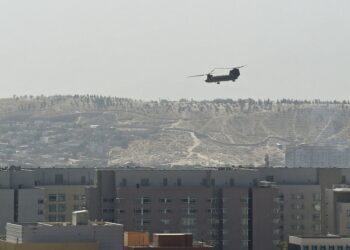
August 15, 2021, became the convergence point of all these dynamics. The president’s decision to leave the capital—framed as an attempt to “prevent bloodshed”—created a command vacuum and turned a military collapse into an administrative and psychological one. His staying might not have changed the broad arc of history, but it could have altered how the end unfolded: coordinating an orderly evacuation, negotiating a managed transfer, and sending a unified message to prevent total institutional breakdown. This is where individual agency, even within tight structural constraints, becomes measurable.
Yet any accurate assessment must place these choices back into the structural context. Without the reduction and eventual cessation of vital external support, and without the psychological shock of the Doha Agreement, a collapse of such speed would have been unlikely. Chronic corruption, a rentier economy, and the crisis of legitimacy—exposed by the election dispute and the parallel inaugurations of March 9 and the political deal of May 17, 2020—had already weakened the state long before summer 2021. Ghani’s role must be viewed within this environment: not as the sole cause, but as the factor that shaped the velocity and character of the end—centralization instead of coalition-building, resistance to transition models, delayed security reshuffles, a narrative divorced from reality, and the decision of August 15.
Ultimately, the events of August 15, 2021 offer three lessons for public policy. First, in multilayered political systems, horizontal coalition-building and institutionalized participation of local actors must be strengthened. Second, security-sector design must minimize external dependency and include practical scenarios for periods of reduced support. Third, mechanisms for power transfer must be drafted before crises emerge, so that the cost of surrender remains high for mid-level political and security actors. Without these reforms, any future government— even with external backing—will remain fragile in the face of similar shocks.
The opinions expressed here are those of the authors alone and do not reflect Deeyar’s editorial stance.